POSTERS AND PRINTS BLOG
POWERED BY PEOPLE FOR PEOPLE WHO PREFER TO HAVE THEIR WALLS COVERED!
““People who enjoy waving flags don’t deserve to have one.””
POSTERS AND PRINTS BLOG
POWERED BY PEOPLE FOR PEOPLE WHO PREFER TO HAVE THEIR WALLS COVERED!
““People who enjoy waving flags don’t deserve to have one.””
Banksy is the most famous anonymous artist on this planet, known for stencil-heavy images that blend dark humour with pointed political commentary. Emerging from the Bristol scene and spreading worldwide, he pulled off something most artists never manage: he made street art feel like a live news event. A new piece appears, people rush to find it, the internet starts decoding it, crowds gather, officials react, and suddenly a wall is hosting a debate about war, poverty, surveillance, consumerism, and who gets to decide what belongs in public space.
He also rewrote the usual career path. Banksy didn’t “earn” credibility through the traditional chain of galleries, critics, and institutions he bypassed it. He treated streets as his exhibition space, used media coverage as the spotlight, and turned anonymity into part of the artwork itself. The result is an artist who can be openly anti-establishment while still shaping the contemporary art world, influencing how art is created, circulated, and collected at a global scale.
One of Banksy’s biggest achievements is showing that a piece of art can be “temporary” and still land with the force of something hanging in a museum. He also has a rare talent for creating moments that don’t stay inside the art world they explode into mainstream news.
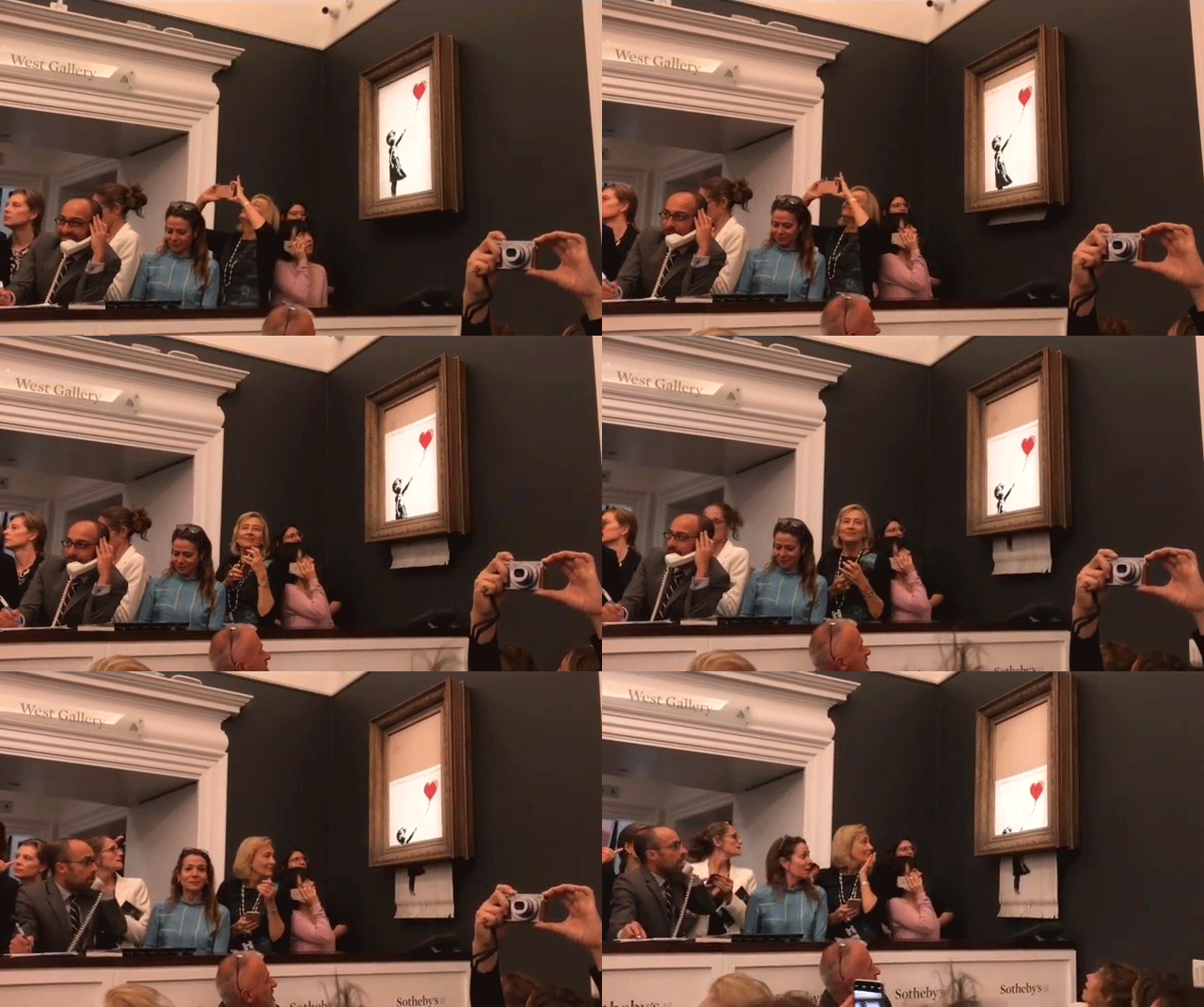
The clearest example is the 2018 Sotheby’s auction stunt. Right after Girl with Balloon sold, the work partially self-destructed in the frame and was later re-titled Love Is in the Bin. Sotheby’s recorded the sale price at £1,042,000 and the shredding was widely treated as a once-in-a-generation moment part prank, part performance, part protest, and a very sharp comment on how art is priced, packaged, and worshipped. This piece has since been sold again in October 2021 for £18,500,000.
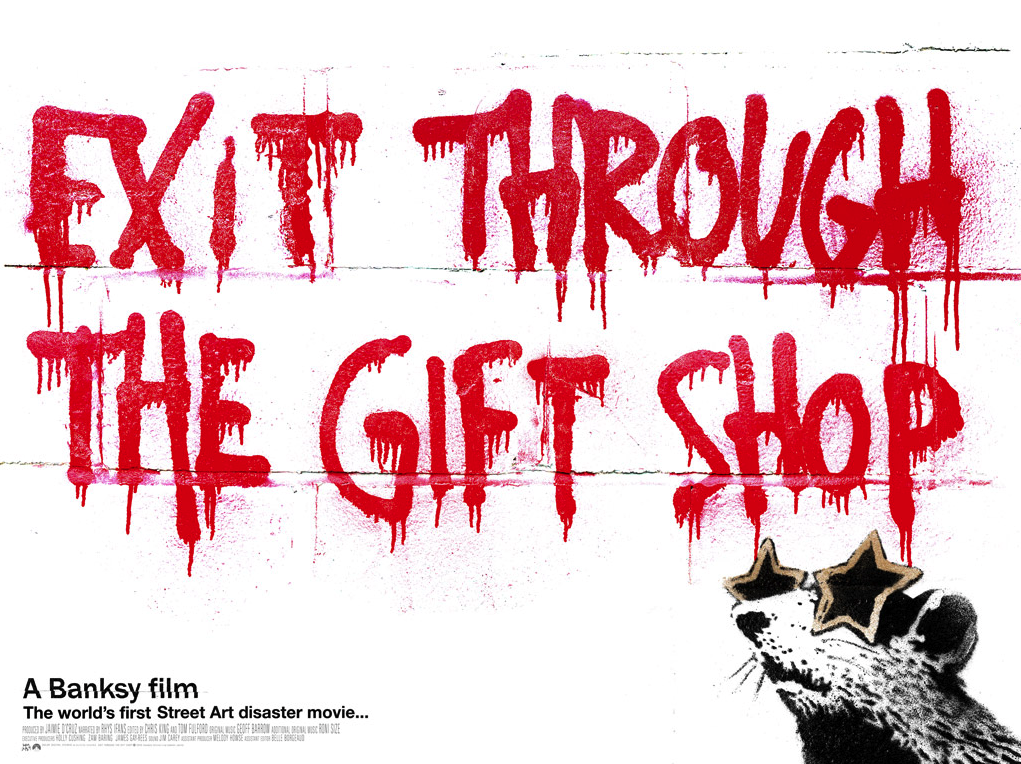
Banksy also pushed his influence beyond walls and editions through film. Exit Through the Gift Shop premiered at Sundance in 2010 and went on to be nominated for Best Documentary Feature at the 83rd Academy Awards. It pulled street art into a global pop-culture conversation and reinforced Banksy’s status as more than a mural painter, he became a storyteller who could shape how the entire movement was seen.
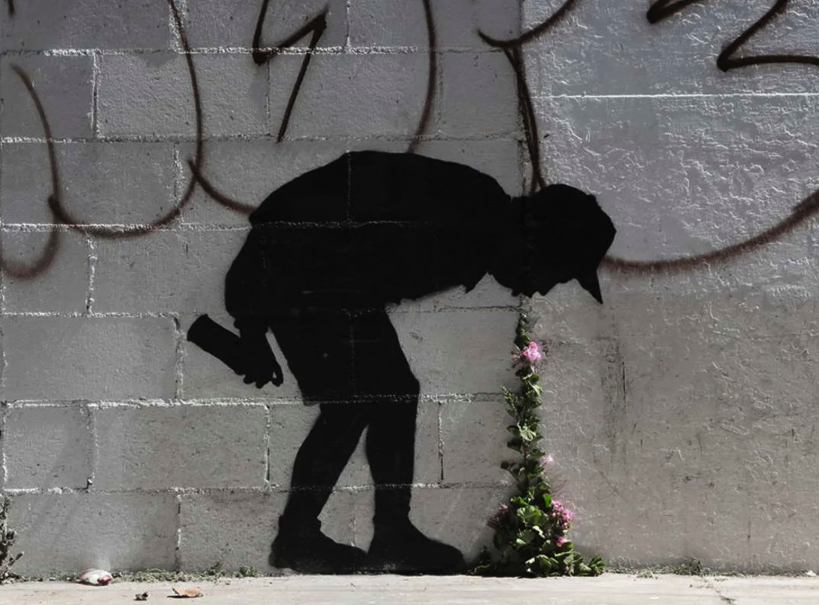
When people mention Banksy’s “unofficial residencies,” they’re usually talking about Better Out Than In his month-long New York City residency in October 2013. Banksy announced he’d run a street show for the entire month, releasing at least one new work each day and documenting it online.
What made it historic wasn’t just the pace, it was the structure. Banksy turned New York into a rolling exhibition and turned the public into the audience, the critics, and sometimes the caretakers. Each daily drop became a scavenger hunt and a stress test: some pieces were protected behind plexiglass, some were painted over or defaced, others were removed, and the city itself became part of the artwork’s story. The “show” wasn’t only what he made it was how the public reacted, how fast it spread, and how quickly the street reclaimed it.
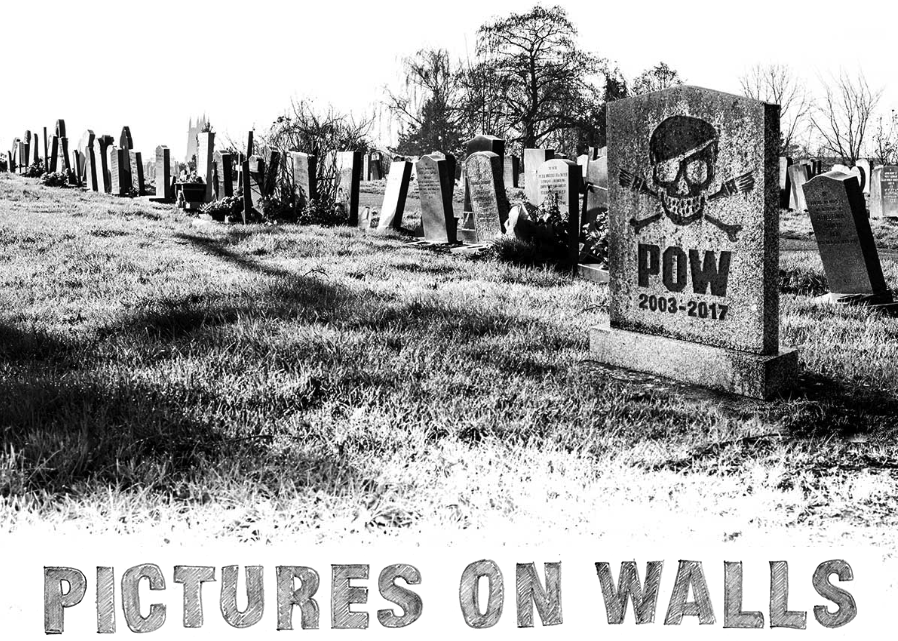
Banksy’s link to Pictures On Walls (POW) helped move street art from the wall to the living room without stripping away its edge. POW positioned itself as a collective that produced and distributed work outside the usual gallery gatekeeping, using the internet and editions to reach buyers directly. Over time it became closely associated with releasing and distributing Banksy prints during the years when the market really took off, and it’s widely referenced as the main outlet for Banksy editions from 2003 until that last sad day when POW closed in 2017.
That’s a big deal because “Banksy prints” remains one of the most searched terms in the entire street-art collecting world. POW helped normalise the idea that a street artist could also be a serious printmaker, and that collecting could be within reach without turning the work into a velvet-rope luxury product. It also helped Banksy’s imagery travel globally, not just through photos of murals, but through real, owned editions in private collections.
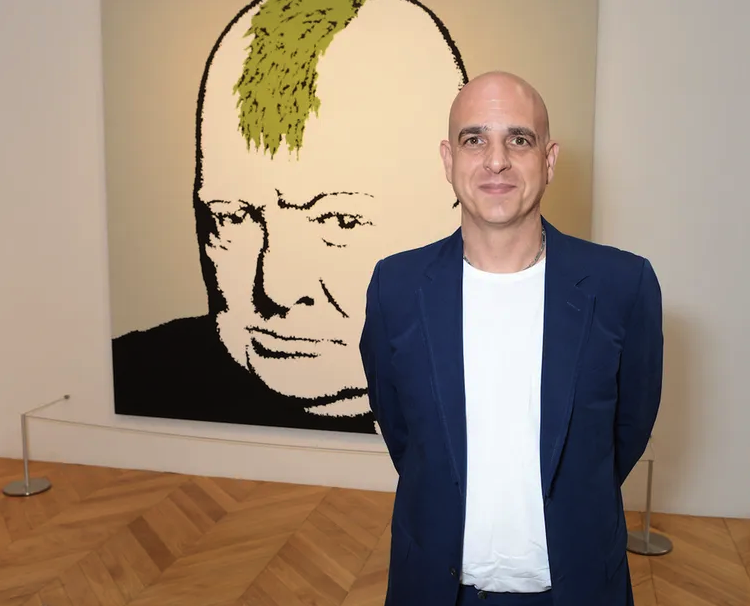
It’s hard to talk about Banksy’s rise without Steve Lazarides, often described as a key early associate and agent figure. Reporting has noted Lazarides met Banksy in 1997 and worked with him until 2008, helping document and manage work during the period when Banksy shifted from underground name to international phenomenon. That mattered for practical reasons: street art is fleeting, hard to archive, and even harder to sell responsibly without some structure behind it.
It also shaped the legend. Banksy’s story runs on secrecy, timing, and control of narrative. The people around him helped keep that machine running, supporting releases, documentation, and distribution without blowing up the anonymity that makes Banksy’s work hit harder.
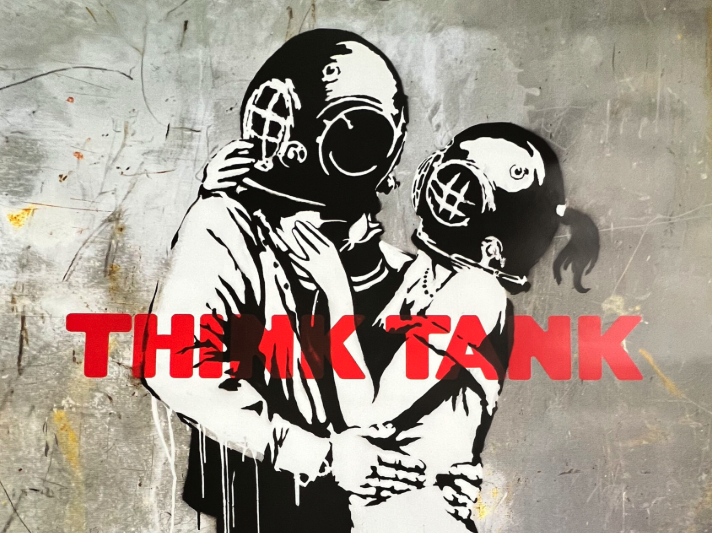
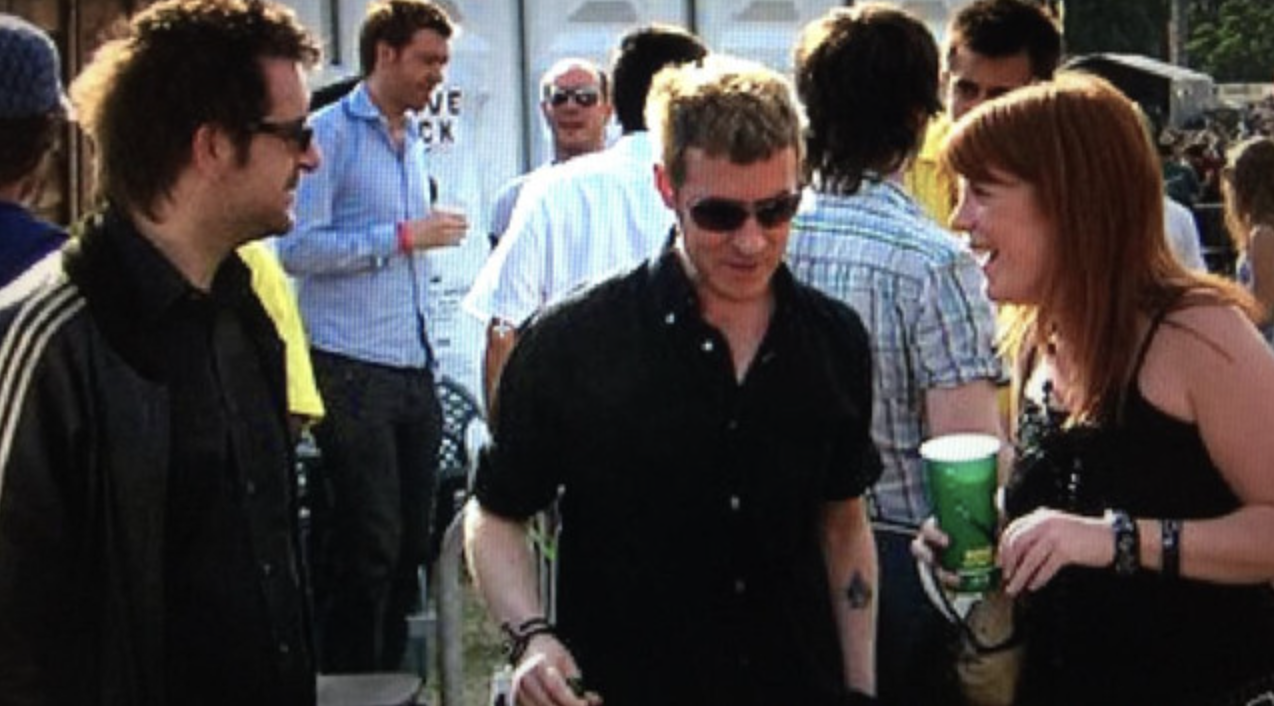
Banksy’s connections to UK music aren’t random; they sit in the same creative orbit as his street work. The clearest documented example is Blur. Their 2003 album Think Tank credits Banksy with the cover artwork, and Banksy has been quoted saying he took on some commercial work “to pay the bills,” specifically mentioning the Blur cover. Because Blur’s frontman Damon Albarn is also the driving force behind Gorillaz, it places Banksy inside Albarn’s wider creative world, even when Banksy isn’t officially credited on Gorillaz projects.
With Massive Attack, the connection runs straight through Bristol. Co-founder Robert Del Naja (3D) is a major figure in the city’s graffiti and stencil scene, and biographical coverage notes Banksy has cited Del Naja as an influence on starting out in graffiti. Speculation has periodically swirled around Del Naja and Banksy’s identity, and major art media has reported Del Naja’s public denials, with him arguing the mystery is bigger than any one person. They were both in the same graffiti crew as yutes.
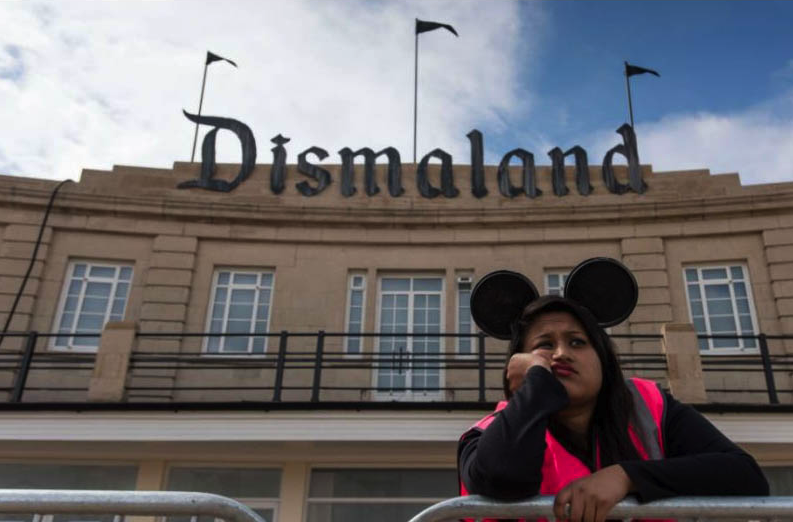
Beyond single works, Banksy has built full-scale projects that behave like cultural events. Dismaland (Weston-Super-Mare, 21st of August to 27th of September 2015) took the familiar logic of the theme park and flipped it into bleak satire, using installations and new artworks from artists Espo, Paco Pomet, Darren Cullen, Jeff Gillette, Josh Keyes, James Joyce, James Cauty, Damien Hirst, David Shrigley, to push messages about consumerism, policing, inequality, and the darker side of spectacle. Open for just 36 days, Dismaland attracted 150,000 visitors and provided a £20 million boost to the local economy. After its closure, the building materials were repurposed as shelters for refugees in the Calais Jungle. Ultimately, Dismaland was a powerful piece of social commentary, using the language of family entertainment to force visitors to confront global crises like inequality and climate change.
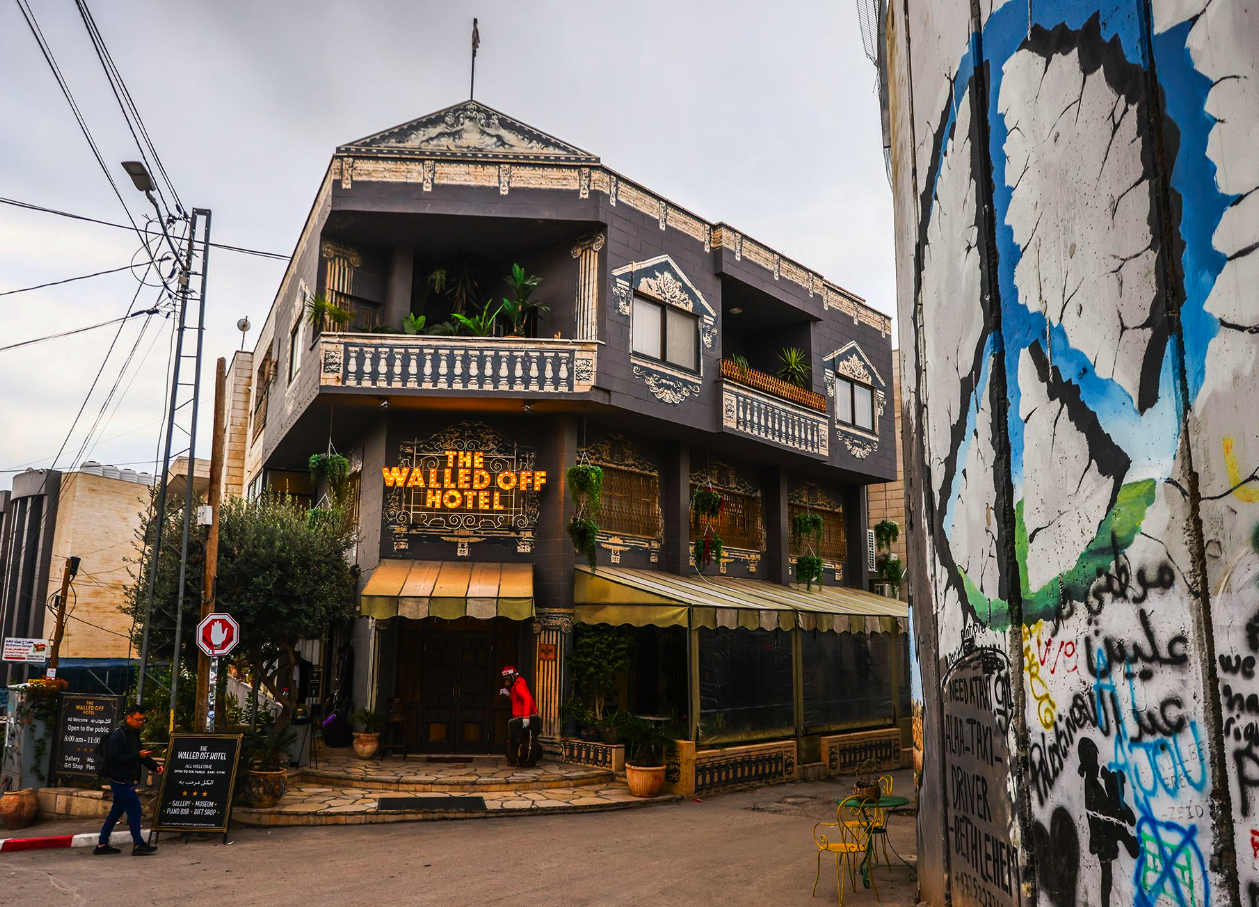
In 2017, he opened the The Walled Off Hotel in Bethlehem sits directly adjacent to the concrete barrier separating Israel from the West Bank, part installation and part functioning venue, aimed at forcing international attention onto the daily reality of the conflict while bringing visitors and spending into the area. Located in Bethlehem, it is a boutique guesthouse and political installation conceived by the anonymous street artist Banksy. Famously marketed as having the "Worst View In The World," its rooms receive only 25 minutes of direct sunlight daily due to the looming 8-metre-high wall. The establishment serves as much as a museum and protest site as it does a hotel. Its interiors are a surreal blend of a dystopian British colonial outpost and modern art gallery. The Piano Bar features wall-mounted security cameras and cherubs in gas masks, while the "Presidential Suite" is designed to reflect the lavish excesses of a corrupt head of state. Beyond aesthetics, the hotel houses a museum dedicated to the biography of the wall and a gallery showcasing works by Palestinian artists, providing them with a global platform. Financed by Banksy but run by local Palestinians, the hotel is a functional business intended to boost the local economy and encourage dialogue. It offers diverse accommodations, from $30-a-night "barracks-style" bunks to luxury suites. While it briefly closed following the events of October 7, 2023, it has since reopened, continuing its mission as a "living archive" of the Palestinian narrative.
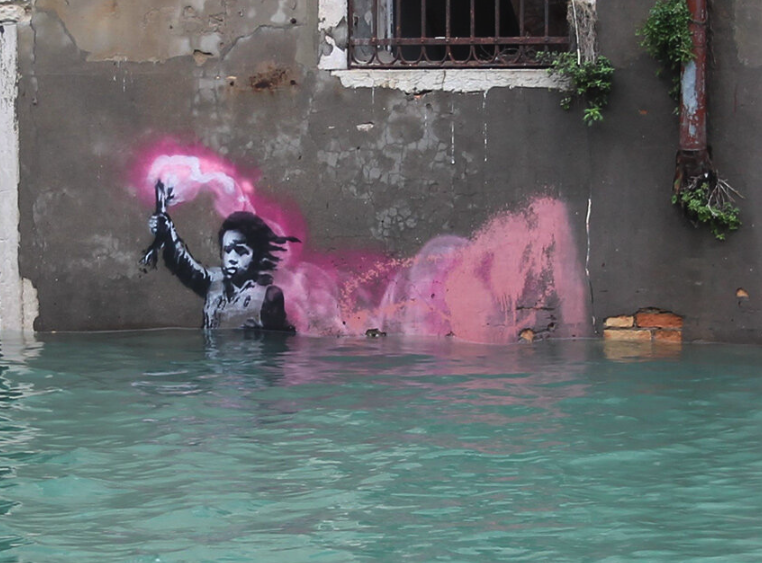
Banksy’s work also raises uncomfortable questions about ownership and preservation. His Migrant Child mural in Venice, first seen during the 2019 Biennale period, became a flashpoint for what happens when a politically charged street work starts to physically deteriorate. In 2025 it was removed from a Venetian palazzo for restoration, with plans for future public display, highlighting how Banksy pieces can end up treated like cultural heritage even when they began as unsanctioned street interventions.
Banksy helped push street art into the mainstream without turning it into something polite. His stencil-forward style is built for instant recognition: clear silhouettes, poorly sprayed hands and feet and his blunt visual metaphors, with his cheeky message that hits quickly on a wall, in a photo, or on a phone screen. He proved political art can be easy to understand without being harmless, and he showed that an artist can influence the market while openly mocking it.
For collectors, Banksy created a path from street pieces to prints and editions, and then into auctions and blue chip conversations. For artists, he helped cement urban and street art as a serious contemporary practice, not a phase or a sideshow. For everyone else, he made social critique hard to ignore because it shows up where people live, where they travel, and where they scroll.
